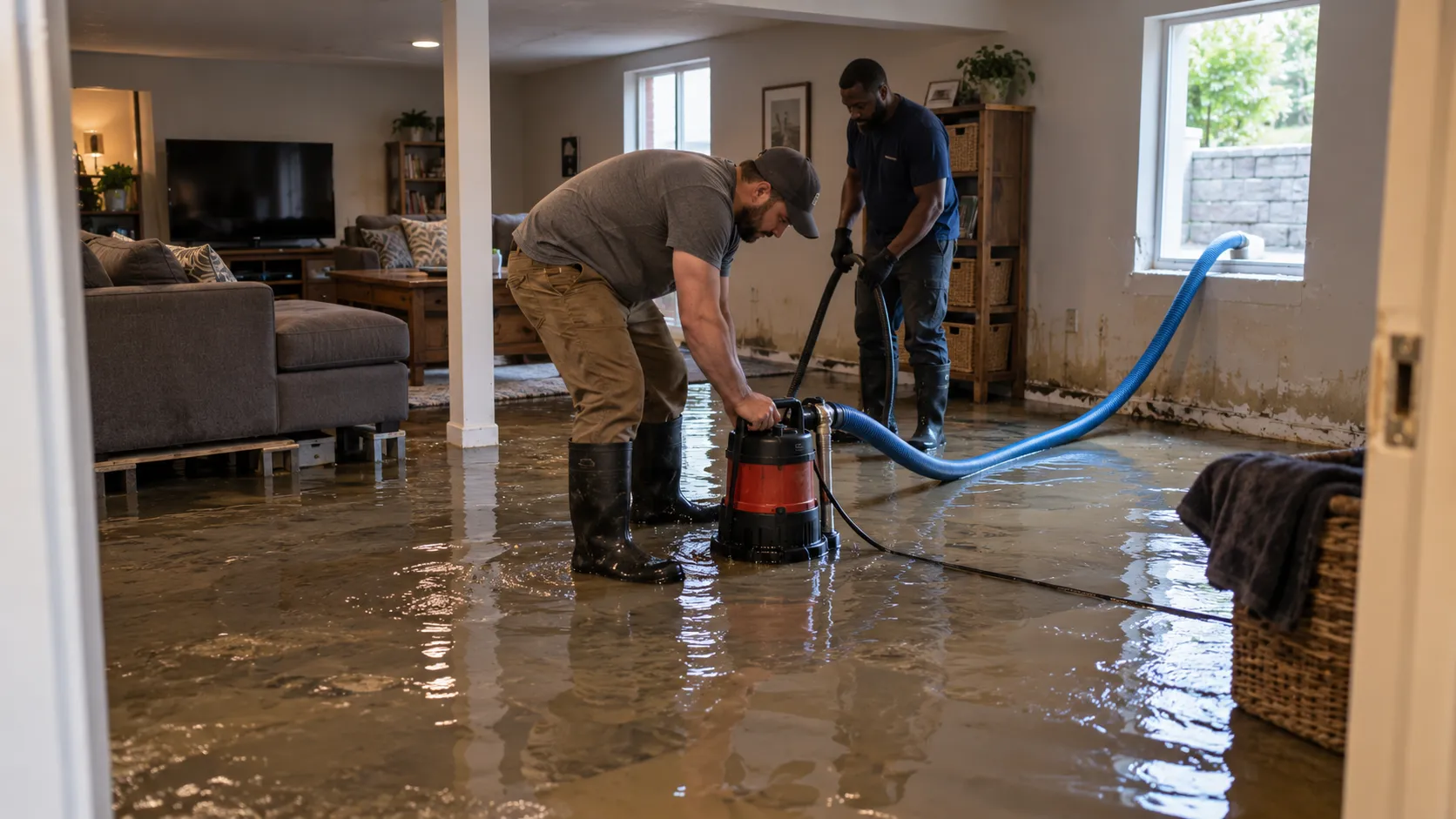
Flooded Basement Cleanup Services
Request your cleanup estimate
A flooded basement is stressful, but it comes with clear steps. Local providers in our network pump out standing water, haul away soaked materials, clean and sanitize the space, and dry it so mold has less to feed on. Monsoon storms, broken supply lines and backed-up drains can all send water into a lower level, and the right plan depends on which one it was.
Fencelies Restoration is a referral service, not a restoration company. You send a request, and it is passed to a local provider who can look at your job. This page walks through a steady first hour, what the work involves, and the questions to ask before you hire. Ask before you hire, and get the scope in writing.
Flooded basement? Start with safety
Take a breath. A steady first hour beats a rushed one. Stay out of the water until you know it is safe, and keep kids and pets upstairs. Then work through the steps below, one at a time.
Power comes before anything else
Water and electricity are a dangerous mix. If water is near outlets, cords, or the panel, do not wade in. If you can reach the main breaker without stepping in water, switch it off. If you cannot, contact your utility company or an electrician. Smell gas? Leave the house and report it from outside.
Know what kind of water it is
Clean rain water is one thing. Water from a washer line or sink drain is another. Sewage backup is the most serious. Water that has sat for a while can carry bacteria even if it looks clear. If you are unsure, treat it as unsafe and wear boots, gloves, and a mask if you must go near it.
Find where the water came from
Common sources include a sudden monsoon downpour, a burst supply line, a failed water heater, a clogged drain, or a leaking window well. Shut off the water at the main valve if the source is inside your home. Tell the provider what you saw. The source shapes the plan, the safety steps, and sometimes the insurance conversation.
Take photos before you move anything
Shoot video and photos of the water line, the damaged items, and the source if you can see it. Write a quick list of what got wet. Providers can often help document damage for a claim. Some policies may cover sudden damage, while rising groundwater is often treated differently, so check your policy.
Why a flooded basement needs quick action
Wet drywall pulls water up like a wick. Carpet pads hold moisture long after the surface feels dry. Mold can begin to grow in a couple of days when materials stay damp. Many providers can respond quickly, but availability varies, so reach out early and ask what the schedule looks like.
A note on basements in our region
Many homes in the Greater Phoenix area are built on slabs, so a true basement is less common here. Still, sunken rooms, walkout levels, lower garages, and cellars in older or custom homes can flood after a heavy storm. After long hot, dry stretches, the ground can shed sudden rain toward the house instead of soaking it in.
What flooded basement cleanup includes
The exact scope depends on the water and the space. A typical job may involve:
- Pumping out standing water
- Removing soaked carpet, pads, insulation, and damaged drywall
- Cleaning and sanitizing floors and walls
- Running fans and dehumidifiers until moisture readings are normal
- Checking for hidden dampness and early mold signs
Hard water can leave a chalky film on concrete and tile once things dry. Ask whether the provider will clean it off.
Finished basements
Finished spaces hide moisture. Water gets behind baseboards, under flooring, and inside wall cavities. A provider may open small sections to check. Expect some drywall or trim to come out, and ask which pieces can be dried in place.
Unfinished basements
Bare concrete dries more simply, but stored boxes, shelving, and the water heater area still need attention. Cleaning matters here, since dirt and residue can linger in corners and along the slab edges.
Your belongings
Move what you safely can to a dry spot upstairs. Hard items like metal tools and plastic bins can often be cleaned. Porous items such as cardboard, upholstered furniture, and mattresses are harder to save, especially after contaminated water. Keep photos before you toss anything, and hold off on discarding items until you have documented them.
After the cleanup
The job is not done when the water is gone. Ask for moisture readings that show the structure is dry. Watch for musty smells, stains that return, or peeling paint over the next few weeks. Rebuilding, such as new drywall or flooring, is usually a separate step and may involve a separate contractor.
Ask before you hire
A calm conversation tells you a lot. Use these questions, listen to how the provider answers, and compare at least a couple of written estimates when you can.
Questions worth asking
- Are you licensed and insured for work in my state?
- What does the estimate include and exclude?
- How will you measure that the space is dry?
- What happens if you find hidden damage or mold?
- Can you help document the damage for my insurer?
What a good answer sounds like
Clear, specific, and in writing. A solid provider explains the steps in plain words, names the equipment, and tells you what could change the price. They are comfortable saying what they do not know yet.
Red flags
- Pressure to sign before the provider has seen the space
- A vague price with no written scope
- Large cash demands up front
- Promises about what your insurer will pay
- Tearing out materials without explaining why
Request a callback to check provider availability in your area.
How Fencelies Restoration fits in
Fencelies Restoration is a referral service. It does not do the cleanup. Your request goes to an independent provider in our network, who then talks with you about the job. You decide whether to move forward, and there is no obligation to do so.
What's Included
Standing water pumped out
Providers use pumps or wet vacuums to clear standing water from the lower level.
Soaked materials removed
Wet carpet, padding, insulation, and damaged drywall are taken out so they stop holding moisture.
Cleaning and sanitizing
Floors, walls, and surfaces are cleaned, especially after drain or sewage water.
Moisture checks
Readings show whether the space is truly dry before rebuilding starts.
Typical flooded basement cleanup costs
Prices across the U.S. vary a lot by job size, water type, and finishes. These typical ranges are only a starting point, so ask for a written quote.
| Item | Typical range | Notes |
|---|---|---|
| Pumping standing water | $300 – $1,200 | Depends on depth and volume |
| Removing soaked carpet and padding | $500 – $2,000 | Priced by room size |
| Drywall and insulation removal | $1,000 – $4,000 | Higher if walls are finished |
| Cleaning and sanitizing | $1 – $4 per sq ft | Higher for drain or sewage water |
| Drying equipment and monitoring | $1,000 – $3,500 | Based on days of equipment use |
| Sewage-contaminated cleanup | $3,000 – $10,000 | Needs extra safety steps |
How It Works
Stay safe first
Keep out of standing water, switch off power only if you can reach it dry.
Stop and spot the source
Shut off the main valve if a pipe failed, and note the cause.
Photograph the damage
Take photos and video of the water line and wet items before moving anything.
Request a provider estimate
Send a request and ask about scope, drying checks, and written pricing.
Why Call Fencelies Restoration
Ask before you hire
We share the questions to ask, so you can judge a provider with confidence.
Local providers
Independent providers in our network know the storms and home styles of the region.
Plain advice
Short steps and simple words help you act calmly on a stressful day.
No obligation
Request an estimate, compare your options, and decide on your own schedule.
Other Services
Need flooded basement cleanup services in Phoenix?
- Request an estimate in about a minute
- Independent local providers
- No obligation to hire
- Calm, clear guidance
Flooded Basement Cleanup Services FAQ
What should I do first when my basement floods?
Stay out of the water until you know it is safe, and keep power in mind. Switch off the main breaker only if you can reach it dry. Stop the source if it is inside your home, take photos, then request an estimate from a local provider.
Can I clean a flooded basement myself?
Small amounts of clean water may be manageable, but larger floods or drain and sewage water carry health risks. Wet drywall and padding can hide moisture. A provider can check that everything is truly dry.
Does homeowners insurance cover a flooded basement?
It depends on the cause and your policy. Some policies may cover sudden damage, while groundwater flooding is often treated differently. Check your policy and ask your agent. Providers can often help document damage for a claim.
Tell us what happened
Tell us what happened and request an estimate. Fencelies Restoration will connect you with a local provider in our network. There is no obligation.
No obligation