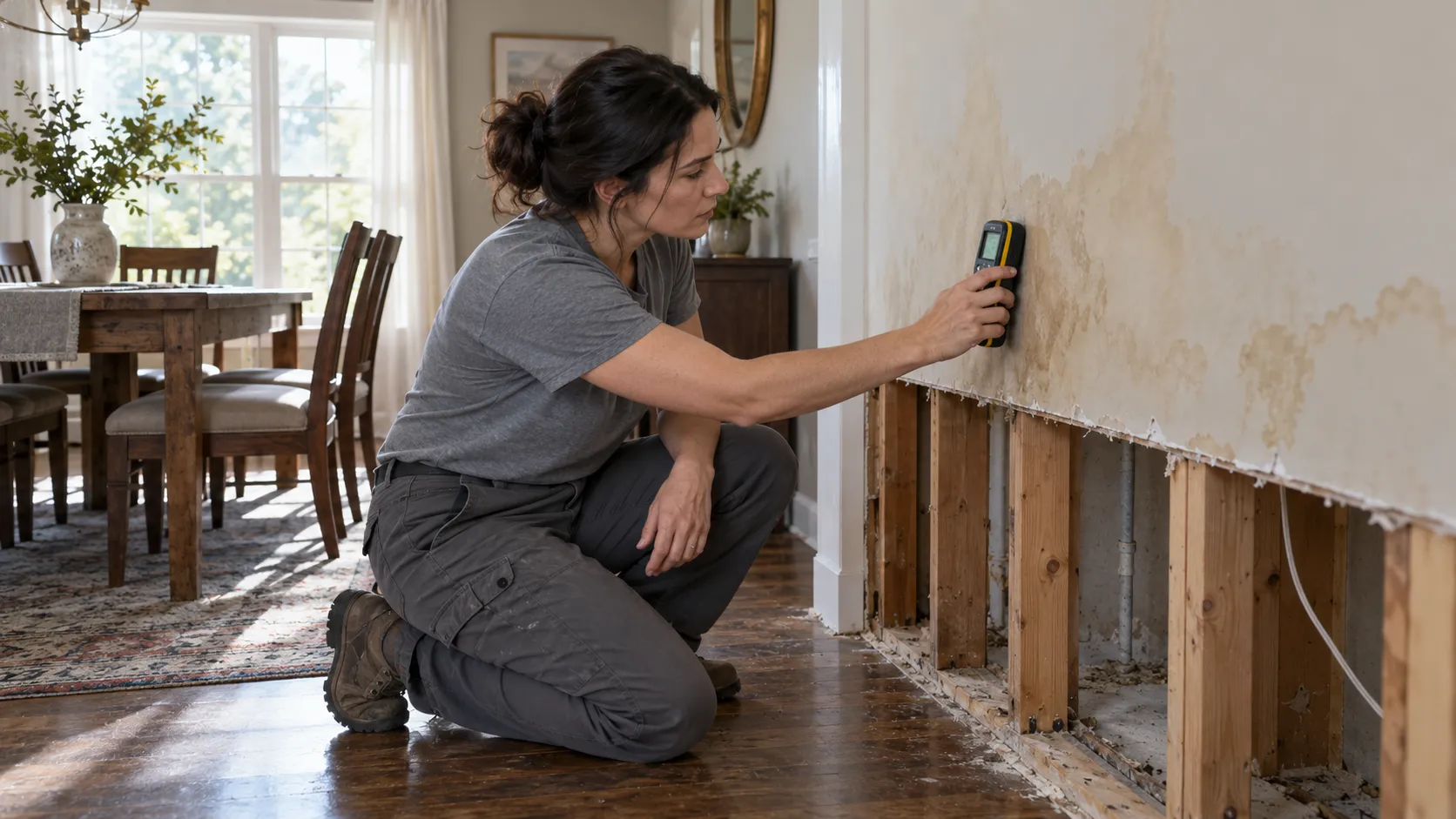
Water Damage Restoration in Phoenix
Request an estimate today
Water damage restoration is the full process of stopping the source, removing water, drying the structure, cleaning, and repairing what was harmed. It covers burst pipes, failed appliances, roof leaks, and the sudden downpours that can hit the Greater Phoenix area.
Fencelies Restoration is a referral service. We do not do the work. When you request an estimate, we connect you with an independent provider in our network. The provider inspects the damage, explains the plan, and gives you a written quote. This page walks you through a steady first hour, the questions to ask before you hire, and the red flags worth knowing, so you can choose with confidence.
Water in the House? Start Here
Take a breath. You can get through this one step at a time. Water damage restoration means stopping the leak, removing the water, drying the structure, cleaning up, and repairing what was harmed. Independent providers do that work. Fencelies Restoration helps you find one in Phoenix.
Your Steady First Hour
A calm first hour protects your home and your budget. Work through this list in order:
- Stay safe. If water is near outlets, appliances, or the panel, keep out. Shut off power at the breaker only if you can reach it while standing on dry ground.
- Stop the source. Close the shutoff valve for a broken pipe, toilet, or appliance line.
- Take photos and video. Capture the damage before you move anything.
- Lift what you can. Move small furniture, rugs, and electronics to dry spots.
- Skip the household vacuum. It is not made for standing water.
Then ask for help while you keep notes.
When a Monsoon Storm Is the Cause
After a long hot, dry summer, the ground is hard and sheds rain fast. A sudden storm can pond on flat roofs, slip past tile roof flashing, or push water under doors on a slab foundation. Stucco can also soak up water and hold it. If a storm caused your damage, mention that to the provider. It helps them know where to look.
Why Time Matters With Water Damage
Water spreads farther than it looks. It wicks into drywall, trim, insulation, and flooring. Mold can start to grow within a couple of days once materials stay damp, and warm indoor air helps it along. The sooner a provider starts drying, the more of your home can usually be saved. Many providers can respond quickly, and Request a callback to check provider availability if you want to talk it through.
What Restoration Usually Covers
Scopes vary, but most jobs include some of these steps:
- Inspection and moisture readings to find hidden wet spots
- Water removal with pumps or extractors
- Drying with air movers and dehumidifiers
- Removal of materials that cannot be saved, like soaked pad or drywall
- Cleaning and sanitizing affected areas
- Repairs and rebuilding, sometimes by a separate contractor
Types of Water and Why They Matter
Providers sort water by how clean it is. The type changes the plan and the safety steps.
Clean water
This comes from a supply line or a clean source. It is the simplest to handle, but it can turn worse if left alone.
Gray water
This comes from a washer or dishwasher. It has some contamination, so cleaning is more involved.
Black water
This includes sewage and floodwater. It carries real health risks. Keep family and pets out and let a trained provider handle it.
Ask Before You Hire
A good provider welcomes questions. Here is what to ask and what a solid answer sounds like.
Are you licensed and insured for work in my area?
A good answer names the license or registration that applies and offers proof of insurance. Be wary of vague replies or a company that changes the subject.
How will you tell me the structure is dry?
Look for talk of moisture meters, daily readings, and a drying log. Guessing by feel is a warning sign.
Can I get a written estimate before work starts?
You want a written scope, an itemized price, and a note on what could change the total. Verbal numbers only are a red flag.
Who will actually be at my home?
A clear answer covers who does the work and whether anyone is subcontracted.
Red flags to watch for
- Pressure to sign right away
- A demand for full payment up front
- No written scope
- Tearing out everything without explaining why
- Refusing to share documentation
Working With Your Insurance
Some policies may cover sudden damage, such as a burst pipe, but slow leaks and flood events are often treated differently. Check your policy and talk to your insurer early. Providers can often help document damage for a claim with photos, moisture readings, and itemized notes. Keep receipts for everything you spend.
Getting Your Home Back to Normal
Drying often takes several days, and the equipment can be loud. That is normal. After the readings look right, the provider cleans up and talks through repairs, like new drywall, paint, or flooring. Dry it right first, and rebuild second. Skipping that order is how hidden moisture comes back later as odor or mold.
Ready When You Are
You do not have to figure this out alone. Tell us what happened, and Fencelies Restoration will refer you to a provider who can review it with you, with no obligation.
What's Included
Moisture Inspection
Meters and scans find hidden wet spots in walls, floors, and ceilings so nothing gets missed.
Water Removal
Pumps and extractors pull standing water out so drying can begin.
Drying and Dehumidifying
Air movers and dehumidifiers dry the structure while readings are tracked until it is ready.
Cleanup and Repairs
Cleaning, sanitizing, and rebuilding return the affected rooms to a safe, normal condition.
Typical Water Damage Restoration Costs
Prices vary by job size, water type, materials, and local rates. These are typical U.S. ranges, not quotes. Always get a written estimate that lists the scope and what could change the total.
| Item | Typical range | Notes |
|---|---|---|
| Inspection and moisture mapping | $200 – $600 | Often folded into the full job price |
| Water removal | $500 – $2,500 | Depends on depth and area |
| Drying equipment and monitoring | $1,000 – $5,000 | Priced by days and equipment used |
| Cleaning and sanitizing | $500 – $2,500 | Higher for gray or black water |
| Drywall and insulation replacement | $1,500 – $6,000 | Varies by square footage |
| Larger multi-room job | $5,000 – $15,000+ | Includes rebuild work in many cases |
How It Works
Make Things Safe
Avoid wet electrical areas, shut off the water source, and keep family and pets out of danger.
Document the Damage
Take photos and video of every wet area before moving or throwing anything away.
Request an Estimate Online
Tell us what happened, and we will refer you to a local provider.
Review the Written Plan
Compare scope and price, ask your questions, and then choose the provider you trust.
Why Call Fencelies Restoration
Ask First
Our guidance lists the questions to ask a provider and what a clear, honest answer sounds like.
Local Fit
Providers in our network know desert homes, stucco walls, slab floors, and monsoon storms.
No Pressure
Requesting an estimate carries no obligation, so you can compare before you decide.
Plain Language
Short, simple advice that treats you as a capable homeowner on a hard day.
Other Services
Need water damage restoration in Phoenix?
- Request an estimate in about a minute
- Independent local providers
- No obligation to hire
- Calm, clear guidance
Water Damage Restoration FAQ
How long does water damage restoration take?
Small jobs may take a few days, mostly for drying. Larger losses can take a week or more, plus time for repairs. The provider should explain the timeline and share drying readings.
Will my homeowners insurance pay for water damage?
Some policies may cover sudden damage, like a burst pipe, but not slow leaks or floods. Check your policy and contact your insurer early. Providers can often help document the damage.
Can I dry out my house myself?
Very small spills, maybe. Larger or hidden moisture usually needs pro equipment, and dirty water is a health risk. A provider can tell you what is safe to handle yourself.
Tell us what happened
Tell us what happened and request an estimate. Fencelies Restoration will connect you with a local provider in our network. There is no obligation.
No obligation